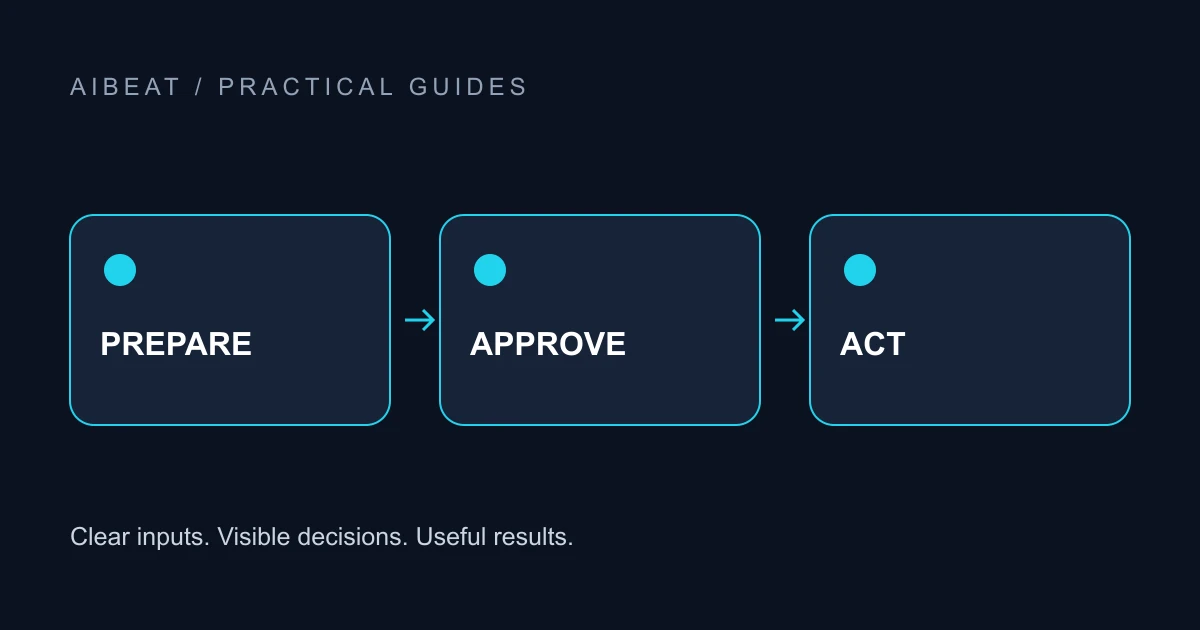
An automation can prepare a useful result without being allowed to act on it immediately. Splitting those stages makes a small-business pilot easier to inspect.
Show the proposed action
For an email, show the recipient and full message. For a record change, show the old and proposed values. For a publication, show the final page and destination. A reviewer should see the action they are approving, not just a vague completion notice.
Set clear rules for exceptions. Missing information, conflicting instructions or an unexpected destination should pause the workflow and go to its owner.
Plan for mistakes
Record who approved an action and its result. Decide how to stop the workflow, correct a bad update and avoid repeating an action after a retry. Begin with drafts and reversible changes before considering broader permissions.
Approval is only useful when the reviewer has enough context and time to make a decision. Measure that workload as part of the pilot, rather than treating it as free.
AIBeat practical guidance. For broader background, see the voluntary NIST AI Risk Management Framework. This checklist is not a NIST certification or a prescribed implementation.